How to Crew an Ultramarathon: The Complete Guide
Tags: crew, race execution, ultramarathon, pacers
You signed up to crew your runner. Either way, race day is coming and you''re about to play one of the most important roles in ultramarathon running — one that most people know almost nothing about.
This guide covers everything. How to prepare, what to pack, how to navigate a course, what to say (and what never to say), and how to use technology to actually be where your runner needs you.
What Crewing Actually Means
Crewing isn''t just showing up at aid stations with a cooler. At its best, crewing is a high-stakes logistics operation where you''re tracking your runner across 50 to 100+ miles of mountain terrain, anticipating their needs before they know what they are, and making split-second decisions about food, gear, and pacing — all while they''re running on fumes at 2am.
Done well, a great crew can shave an hour off a finish time. Done poorly — or absent when needed — it can end a runner''s race entirely.
Before Race Day: The Prep Work That Actually Matters
Study the Course Like It''s Your Race
Download the course GPX file. Drive every access road you''ll need on race day. Identify which aid stations are crew-accessible — not all of them are. Many ultras have stations deep in the backcountry that only pacers can reach on foot.
If your runner is on HARDN, the 3D course flyover lets you walk the entire course virtually before you set foot near it — terrain, elevation swings, aid station locations, all in one place.
Understand the AI Segment Strategy
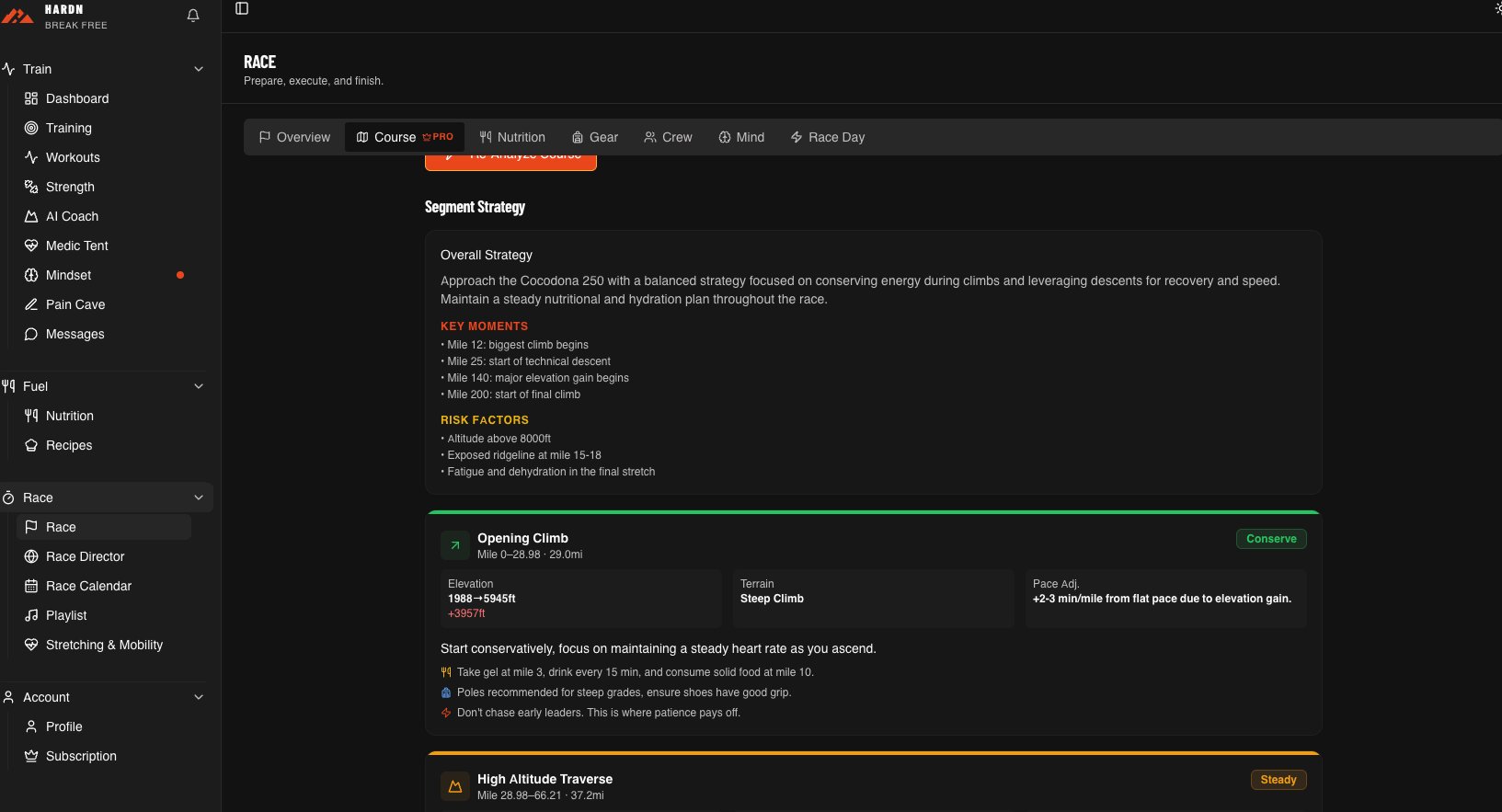
HARDN breaks every race into segments with pacing targets, key moments, and risk factors for each section. Ask your runner to share their plan before race day — you''ll know exactly when to expect them at each crew point and what phase of the race they''re in when they arrive.
Know Their Race Plan — Including the Mental Side
Ask your runner these before race day:
- What does it look like when you''re bonking?
- What do you want me to say if you talk about dropping?
- Is there anything I should never say to you mid-race?
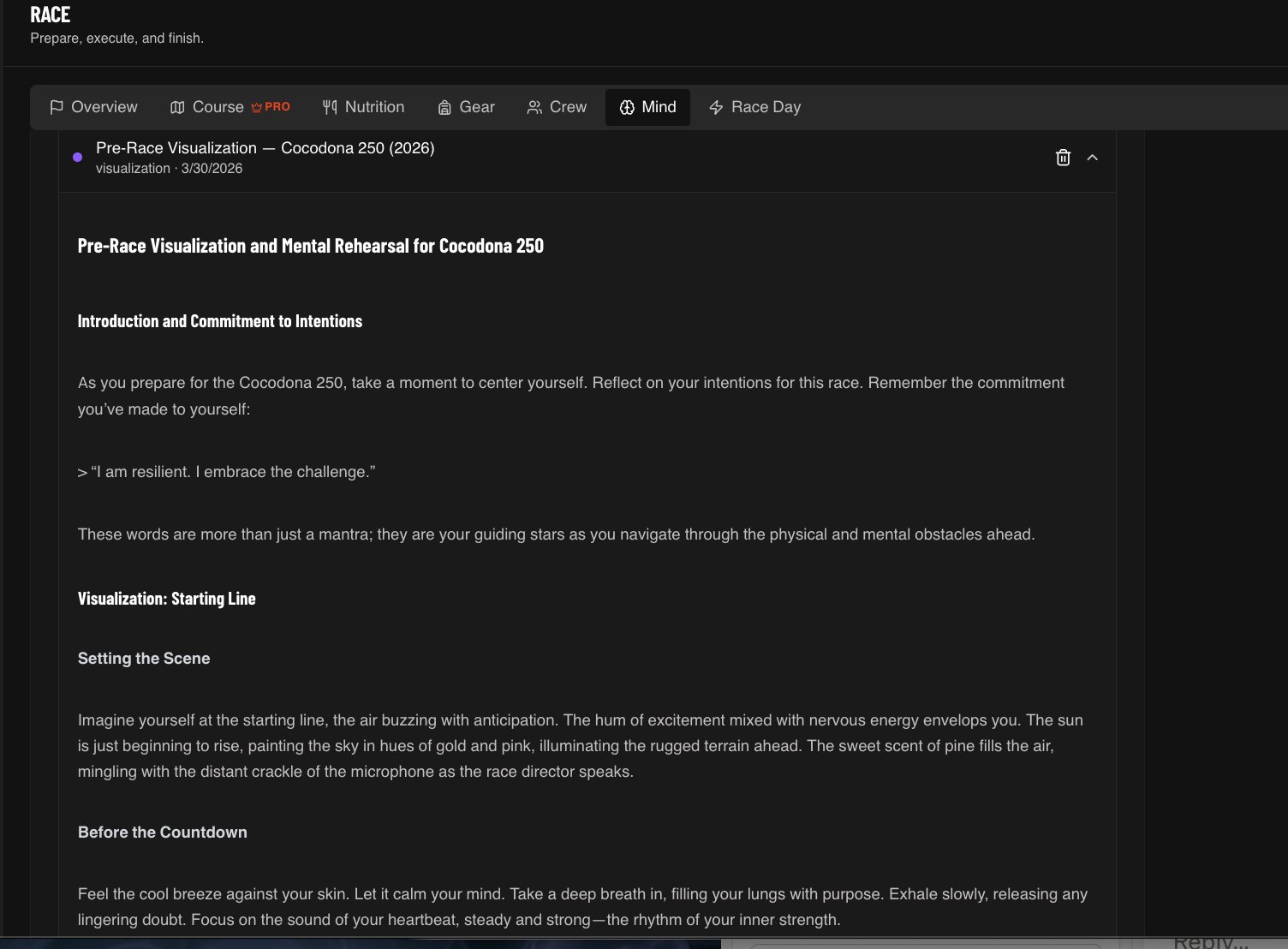
HARDN''s Race Mind feature builds a pre-race mental protocol from the runner''s Pain Cave Journal — their mantras, their dark moments from past races, reframing techniques for when things go sideways. If your runner has done that work in HARDN, ask them to share their protocol with you.
What to Pack: The Crew Kit
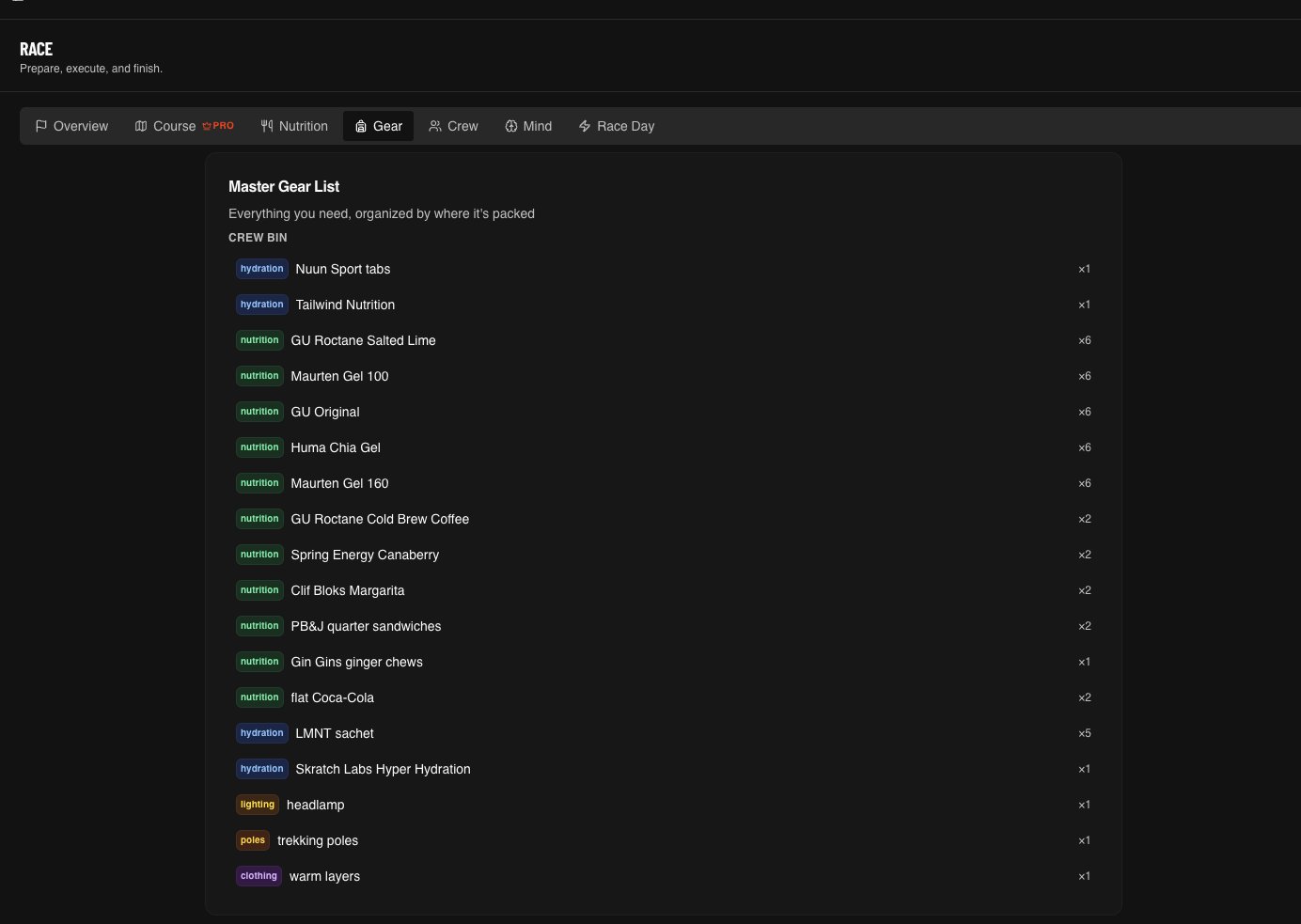
HARDN''s Gear tab organizes everything your runner needs by where it''s packed — crew bin, drop bag, worn. Before race day, pull up the Master Gear List together and walk through every section so nothing gets left in the parking lot.
At the Aid Station: The Crew Sheet
HARDN''s Crew Sheet is the closest thing to a race day operating manual for your crew. Each aid station gets its own card: what to hand the runner, what to collect, what to watch for, and how to respond if they say they''re struggling.
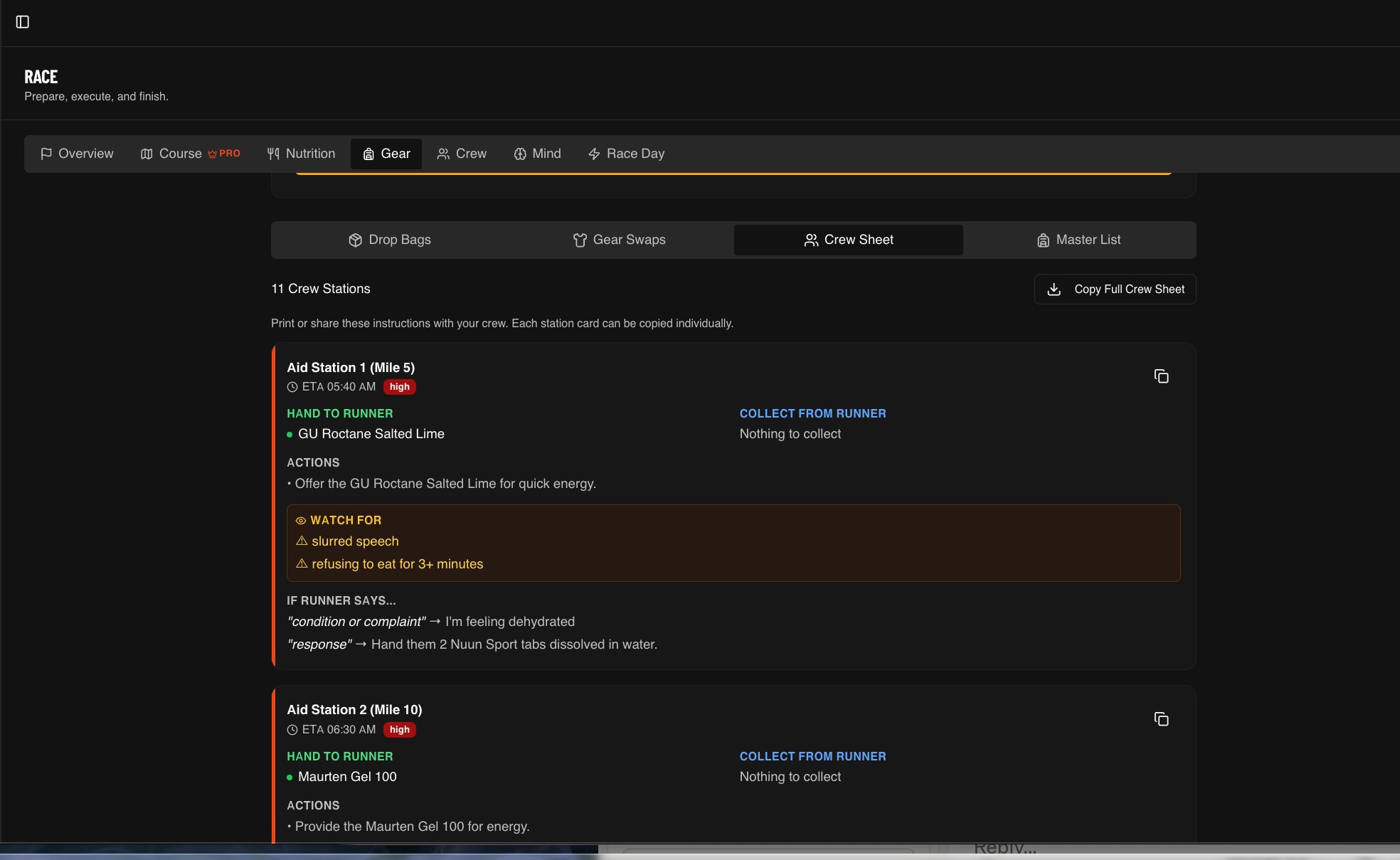
The Watch For alerts are the part most crews miss. Slurred speech at mile 5, refusing to eat for 3+ minutes, stopping making sense — HARDN flags the warning signs specific to your runner so you know when to intervene versus when to just get them moving.
The Handoff Sequence
When your runner rolls in, the clock is running. Keep it tight:
- Hand them what they need immediately — water, food, whatever they asked for at the last stop
- Quick visual check — blisters, chafing, movement quality, mental state
- Two questions only: How are you feeling? What do you need?
- Work through the Crew Sheet — gear swaps, nutrition top-off, any medical
- Get them out the door — gently but firmly
What to Say — And What Never To
If your runner built a mantra list in HARDN''s Pain Cave Journal, pull it up and say the words out loud. They put those words there for exactly this moment.
Using GPS to Crew Smarter
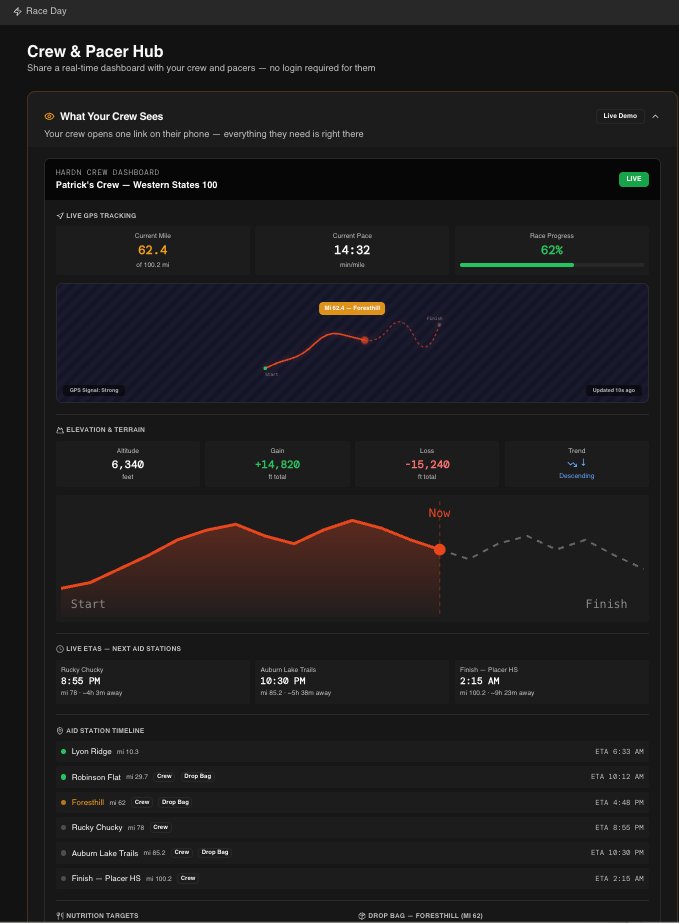
Most race-provided tracking updates every 15–30 minutes. That''s enough to know your runner left an aid station, not enough to time your arrival at the next one. HARDN''s crew dashboard updates position every 10 seconds — no app download, no account required, just a link your runner sends before the race.
What that means practically: you know when to leave for the next crew point before your runner even hits the previous one. The live ETA panel tells you when they''ll arrive at Rucky Chucky, Auburn Lake Trails, and the finish — and updates as they move.
Night Crewing: A Different Animal
Everything gets harder after dark. You''re tired. Your runner is tired. The logistics are more complicated and the stakes feel higher.
- Stay warm yourself — a cold, miserable crew is a useless crew
- Make your station visible — string lights or a lantern, visible from 50 yards
- Keep warm food ready — broth or ramen at 3am is worth more than any gel
- Keep tracking — knowing they''re 1.5 miles out vs 4 miles out changes everything about how you prep
- Extra patience — night runners are often incoherent. That''s normal. Work the Crew Sheet calmly.
The Race Day Crew Checklist
Everything above, condensed into a checklist you can reference on race day.
The Crew Mindset
Here''s the truth: crewing is a long, cold, logistically complicated act of service. You''ll spend a lot of time waiting in parking lots. You''ll drive unfamiliar mountain roads in the dark. You''ll feel helpless when your runner is struggling and there''s nothing you can do.
And then they''ll cross the finish line.
There is nothing quite like watching someone you care about break through something they didn''t know they could break through. Ultra running strips everything away — ego, pretense, comfort — and leaves whatever is real. When you crew someone through that, you''re part of it.
That''s why people do it. And why, somehow, they always agree to do it again.